
The following article is a guest post
Every fence starts with the same chore: holes. Lots of them. Before you buy or rent anything, it pays to figure out which tool actually fits your job. A manual post hole digger is cheap, quiet and fits in the shed. A powered auger can drill a hole in under a minute. The right answer depends on four things: how many holes you need, what your ground is like, how big the holes have to be, and how often you will do this again.
Start with the post count
Walk the fence line and count. Most wood and vinyl privacy fences put a post every 6 to 8 feet, and farm fences commonly space line posts 8 to 12 feet apart, with heavier posts at corners, ends and gates.
A rough guide many people land on:
- Under 15 holes: a hand digger is usually the sensible choice. You will spend an afternoon, not a week, and you avoid rental fees and pickup trips.
- 15 to 50 holes: this is the gray zone. Soil decides it. Soft loam makes hand digging fine; clay or rock makes a powered auger worth the money.
- 50 holes and up: almost everyone is better off with powered help. Digging dozens of 2 to 3 foot holes by hand is slow, and the last ten are always the hardest.
Read your soil before you pick the tool
Soil matters more than post count. Dig one test hole by hand wherever the fence will run. What you hit tells you most of what you need to know.
- Loam or sandy soil: easy going for a clamshell digger. Sand can cave in on deeper holes, so a narrow hole dug quickly works better than a wide one.
- Heavy clay: clay grabs the blades of a hand digger and has to be pried out a few inches at a time. When it is dry it can be nearly as hard as concrete. A powered auger cuts it far faster, though wet clay can pack onto the flighting and needs to be knocked off.
- Rocky ground: rocks stop a hand digger cold and can bind or kick a small gas auger. Keep a digging bar on hand no matter which tool you choose. For seriously rocky ground, an auger with carbide or rock teeth on a hydraulic machine handles it much better than a handheld one.
- Roots near trees: small roots cut with a pruning saw; big ones mean moving the post.
Whatever you have, wet the ground a day ahead if it is rock hard. A slow soak softens clay and makes any tool work better.
Hole size and depth
A common rule of thumb is to bury about one third of the post’s length, and to go below your local frost line in cold climates so frost heave does not push posts up over the winter. Your local building office can tell you the frost depth for your area.
Hole width is usually about three times the width of the post. A 4×4 post (3.5 inches across) wants roughly a 10 to 12 inch hole if you are setting it in concrete. Larger posts, gate posts and corner posts need wider and deeper holes.
This is where tools separate:
- Most hand diggers comfortably make holes about 6 to 9 inches wide. Going wider means a lot of extra scraping.
- One-person and two-person gas augers commonly run bits from about 6 to 12 inches.
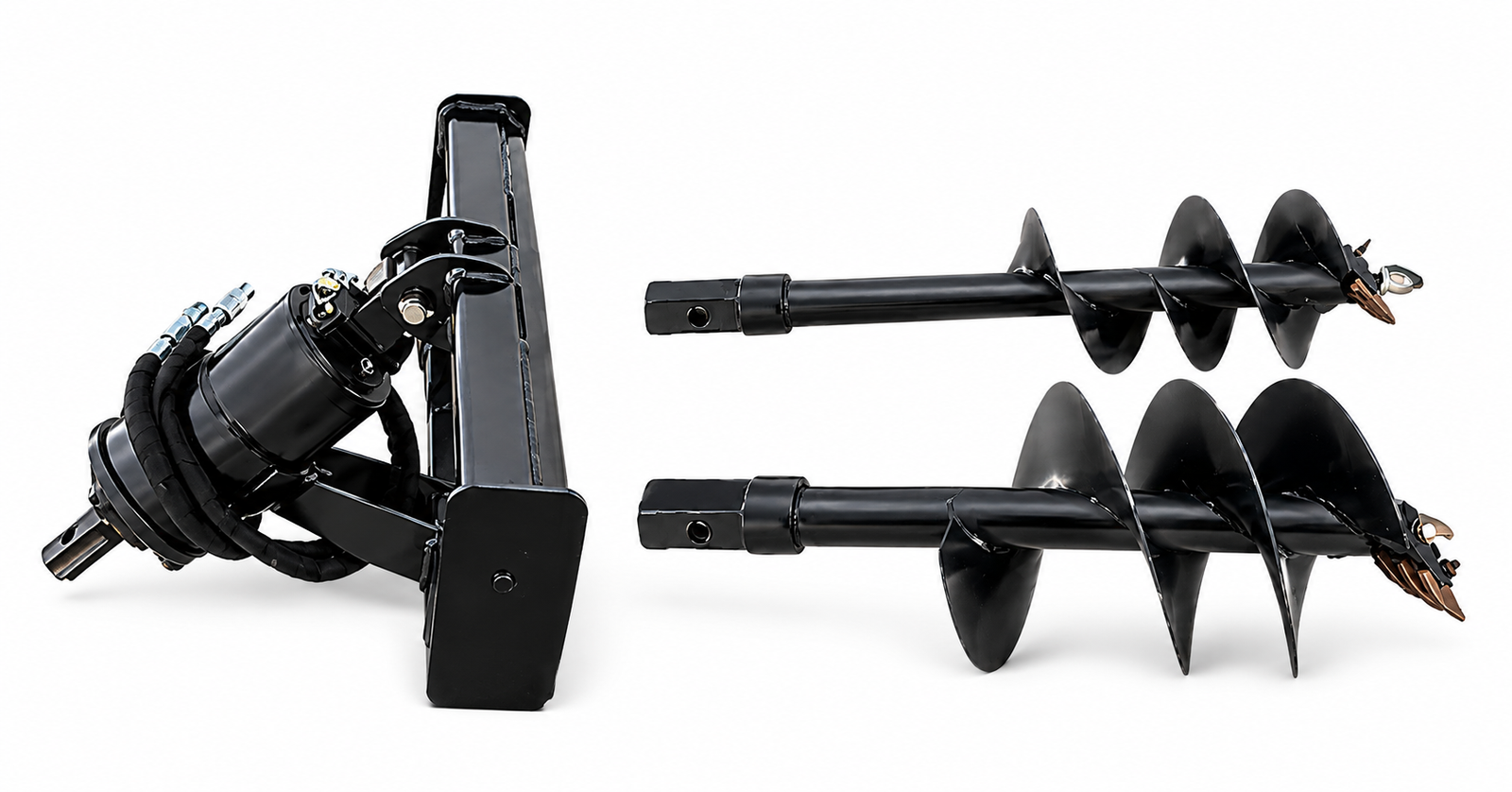
- Hydraulic augers that mount on a skid steer, compact tractor or mini excavator run bits from about 6 inches up to 18 inches or more, and they can go deeper with an extension.
If your plan calls for 12 inch holes 3 feet deep, a hand digger is going to feel like punishment.
The four main options
1. Manual clamshell digger. Cheap, no fuel, no noise, and very accurate for placing holes exactly where you want them. The downside is your back and your shoulders. Best for small jobs in workable soil.
2. One-person gas auger. Light enough to carry and fine for fence posts in soft to medium soil. The catch is torque: when the bit hits a rock or root, the handles try to twist out of your hands. Use one with a good grip, keep your stance wide, and never wrap your body around the handles.
3. Two-person gas auger. More power and better control, since two people share the kick. Good for medium sized jobs, but you need a helper the whole time.
4. Hydraulic auger on a machine. A skid steer, compact tractor or mini excavator with an auger attachment drills straight, consistent holes with almost no physical effort. The machine absorbs the torque, not you. It also handles bigger bits and harder ground. The tradeoffs are cost and access: you need the machine, room to drive it along the fence line, and soil firm enough that the machine will not rut a finished lawn.
When renting beats buying, and when hiring beats both
Renting makes sense for a one-time fence. Most rental yards carry gas augers, and many rent skid steers or mini excavators with auger attachments by the day. Plan the day before you pick it up: mark every hole, call to have utilities marked, and have posts and concrete on site so the rental clock is spent drilling, not waiting.
Buying pays off if you fence regularly, run livestock, maintain a property with lots of fence, or already own a skid steer, tractor or mini excavator. Adding an auger attachment to a machine you already have is often cheaper over time than repeated rentals.
Hiring someone is the smart call when the ground is full of rock, the job is very large, or the posts are big. Fence contractors with machine-mounted augers can drill a long line in a day, and they carry the tools for the hard spots.
Safety first, every time
- Call 811 before you dig. It is free, and in the United States it is how you get buried utilities marked. Hitting a gas or power line with an auger is dangerous and expensive.
- Wear gloves, boots and eye protection.
- Keep loose clothing away from the spinning bit.
- Back the auger out often to clear soil, rather than drilling the whole depth in one pass. It keeps the bit from binding.
- With a machine-mounted auger, keep people well clear of the bit while it turns.
A quick decision checklist
- Count your posts.
- Dig one test hole to see your soil.
- Check the hole width and depth your posts need.
- Pick the tool: hand digger for small, soft jobs; gas auger for medium jobs; hydraulic auger or a contractor for big, rocky or wide-hole jobs.
- Call 811, mark every hole, and stage your materials before you start.
Choose the tool that fits the ground and the size of the job, and your fence line goes from a dreaded weekend into a job that is finished before lunch.
About the author
Braden Chupp is with Chupp Industrial in Chouteau, Oklahoma, which carries skid steer and mini excavator attachments, including hydraulic augers. He has set a lot of fence posts.